
Australia · Melbourne and Flinders Street Station
Melbourne and Flinders Street Station: the city that meets under the clocks
Say Melbourne and many people think straight away of the mustard-yellow building on the Yarra: Flinders Street Station. Around it is a city that runs on coffee, sport, street art and a great many Vietnamese families.
Scenery
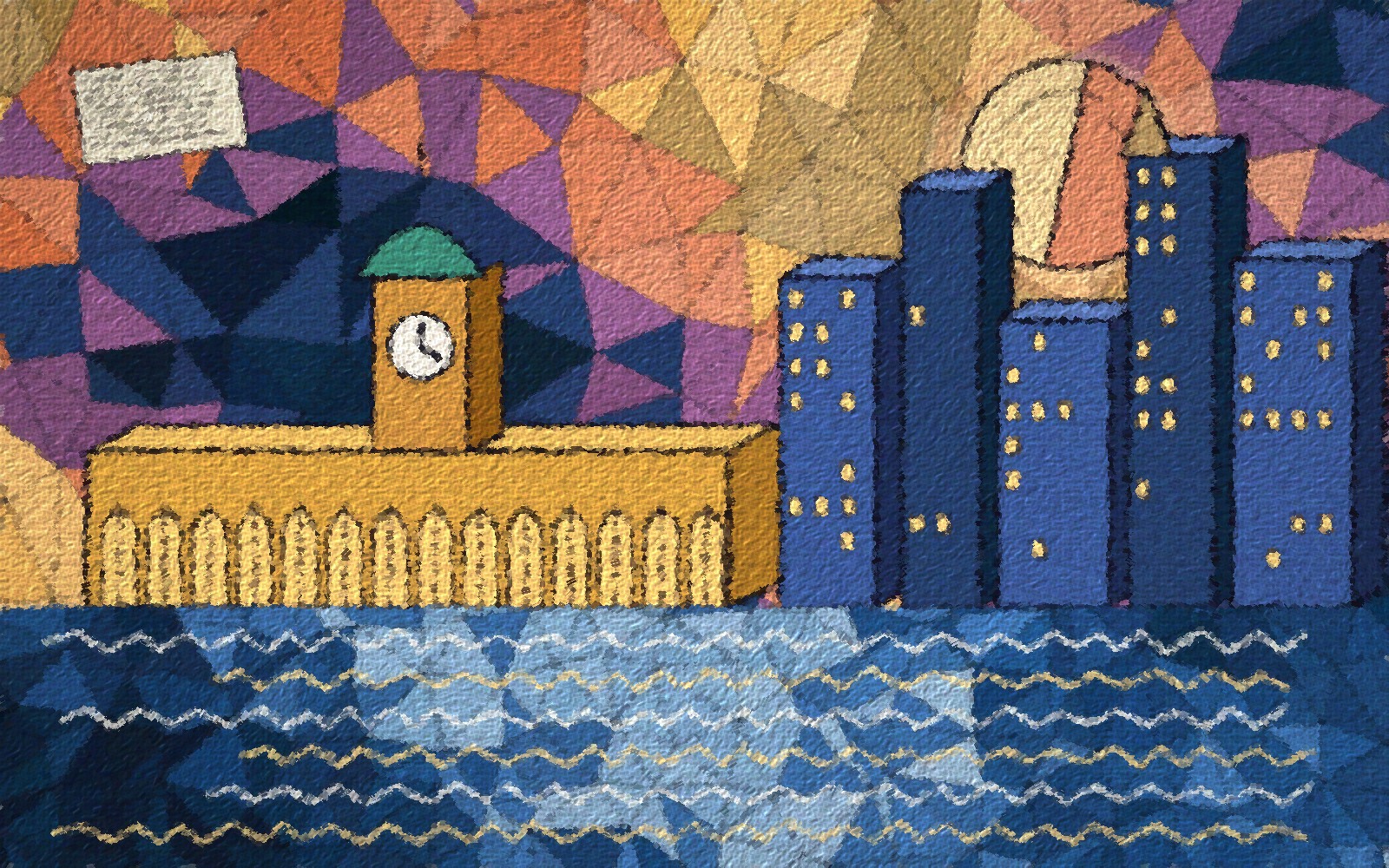
Flinders Street Station sits on a corner in the middle of the city, near Federation Square. Its Edwardian-style facade has a dome, a tower and a row of clocks above the main entrance. In the afternoon the golden sun warms the station wall, which makes it a great spot for photos from across the intersection.
A few steps away are the famous laneways. The network of lanes and covered arcades, such as Block Arcade and Royal Arcade, grew out of the grid layout of the city centre, and some laneways have become open-air galleries, Hosier Lane being the best known. The art changes constantly, so every visit looks different.
Melbourne also has the Yarra River flowing through the centre, large parks and the biggest urban tram network in the world. The colours are at their best in autumn, when the street trees turn.
History and cultural value
Melbourne is the homeland of the Wurundjeri, Boonwurrung (Bunurong) and Woiwurrung peoples of the Kulin alliance, communities who have lived here for tens of thousands of years. The city was founded by settlers in 1835 and named in 1837 after the British Prime Minister William Lamb, the 2nd Viscount Melbourne.
The gold rush of the 1850s sent the population soaring, and by 1865 Melbourne had overtaken Sydney to become Australia's most populous city. After federation in 1901, Melbourne served as the seat of the temporary government until Canberra became the permanent capital in 1927.
Flinders Street Station opened on 12 September 1854 and is the oldest railway station in Australia, although the current building is not the first. The present design won a competition in 1900 by James Fawcett and H. P. C. Ashworth, was completed in 1909 and officially opened in 1910. The station has been on the Victorian Heritage Register since 20 August 1982. “Meet me under the clocks” has become a habit for Melburnians. In the 2024 to 2025 financial year, the station handled about 19.6 million passenger trips.
Melbourne is also the birthplace of Australian rules football, hosts the Australian Open tennis and the Grand Prix, and is home to the MCG.
People
Melbourne has about 5.4 million people (in 2025), around 19% of the national population. The Vietnamese community is a very visible part of the city. According to the 2021 Census, about 90,000 people born in Vietnam live in Melbourne, and more than 117,000 people reported Vietnamese ancestry. The main wave of migration began after 1975, when Australia took in many refugees from Vietnam.
Three areas familiar to Vietnamese people are Richmond, Footscray and Springvale. The eastern end of Victoria Street in Richmond is known as Little Saigon, with grocery shops, phở restaurants and rice eateries. The Tết festival here has been held since 1994, with the street closed for food stalls and performances. Footscray has the Footscray Market and its own Little Saigon, while Springvale, Noble Park and Sunshine North also have large Vietnamese communities.
Famous foods
Melbourne prides itself on being a food city, and it's hard to go far without finding a good cafe:
- Flat white: strong, smooth milk coffee, close to compulsory at the cafes in the laneways.
- Brunch: a late-morning meal of eggs, toast, mushrooms and avocado, and every cafe is packed on weekends.
- Phở (Vietnamese beef noodle soup): on Victoria Street, in Footscray or in Springvale, phở is the most familiar Vietnamese dish.
- Bánh mì (Vietnamese filled baguette): Vietnamese bakeries sell them hot and crisp at friendly prices.
- Meat pies and pastries: Australian and European-style bakeries are everywhere in the city.
When to go and what to know
- Melbourne's weather can change quickly during the day, so always carry a light jacket.
- Autumn (March to May) and spring (September to November) are the most pleasant. January has the Australian Open, so hotels are busy and expensive.
- The city centre is easy by foot and tram. Use a myki card for trains, trams and buses.
- The Tết festival in Richmond follows the lunar calendar, so check the exact date for that year before you go.
- Please respect that this is the land of the Wurundjeri, Boonwurrung and Woiwurrung peoples, and learn more through cultural tours led by Aboriginal guides.
Want to visit this place with your family?
We plan a private itinerary around your group and ages and quote one all-inclusive price by email.